
Why plants bend toward light is the mystery you will investigate in today’s science warm-up. You will examine an observation, develop a possible explanation, and support your thinking with evidence.
Observe the Phenomenon
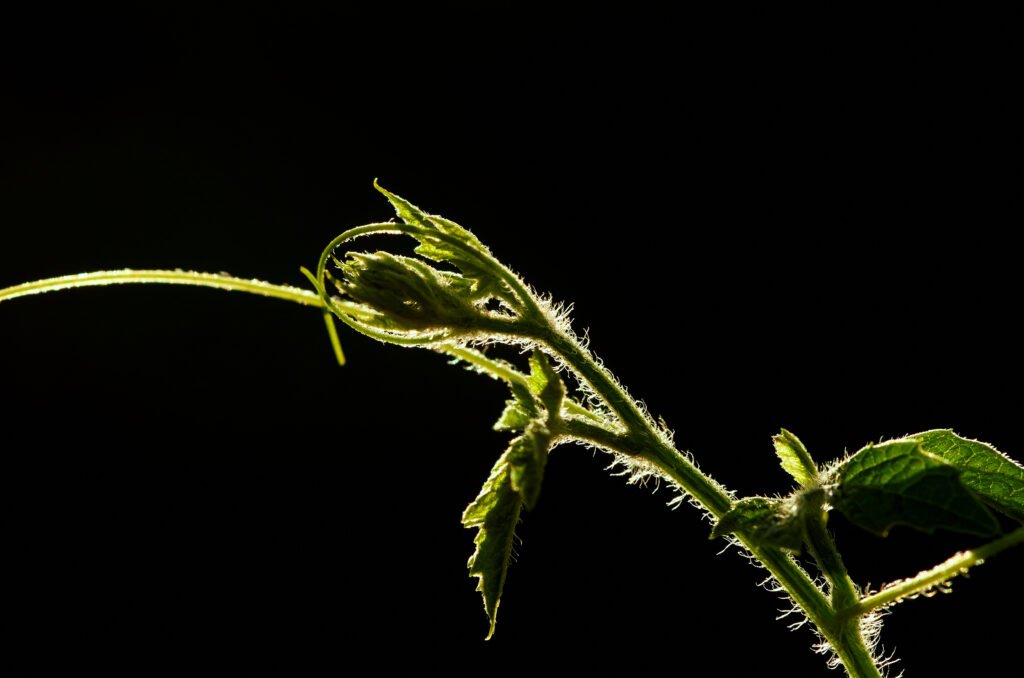
A plant is placed on a table near a window. When it is first placed there, its stem grows straight upward.
After several days, something changes. The plant’s stem gradually bends toward the window, and its leaves begin facing the sunlight.
Why Do Plants Bend Toward Light?
Think about what the plant needs, what it receives from sunlight, and how changing its direction might help it survive.
Your science question: Why does the plant’s stem change its direction of growth?
You do not need to know the official scientific explanation yet. Use what you already know about plants to develop the best explanation you can.
Scientists do not always begin an investigation with the correct answer. They begin with observations, develop possible explanations, collect evidence, and revise their thinking.
Your Five-Sentence Response
Write a response containing at least five complete sentences.
Your response must include:
- A clear claim explaining why the stem bends toward the window
- A description of what the plant receives from sunlight
- An explanation of how bending might help the plant survive
- At least one observation from the phenomenon as evidence
- Scientific reasoning connecting your evidence to your claim
You may begin with this sentence:
I think the plant’s stem bends toward the window because…
Questions to Help You Think
Consider these questions before writing:
- What do plants need sunlight for?
- How might facing the window help the leaves?
- Is the plant moving all at once, or is it changing as it grows?
- Which observation supports your explanation?
- What might happen if someone turned the plant away from the window?
Use these questions to guide your thinking, but combine your ideas into one clear five-sentence response.
Post Your Response in the Comments
Post your response in the comment section below.
Before submitting it, make sure you:
- Wrote at least five complete sentences
- Answered the science question directly
- Included evidence from the observation
- Explained why your evidence supports your claim
- Checked your spelling and punctuation
- Used only your first name and class period
- Did not include personal information
Respond to a Classmate
After posting your explanation, read at least one classmate’s response. Reply to that student with a respectful and science-focused comment.
You may use one of these sentence starters:
- I agree with your explanation because…
- My explanation was similar because…
- One difference between our explanations is…
- Your response made me wonder…
- One observation that supports your idea is…
You may disagree with an idea, but your response must remain respectful. Discuss the scientific explanation, not the person who wrote it.
Take the Extra Challenge
If you finish early, answer one of these questions at the end of your comment:
- What might happen if the plant were turned away from the window?
- Would the plant bend toward an artificial light?
- How could we test whether light caused the change?
- Would the roots respond to light in the same way as the stem?
- What evidence should we collect during an investigation?
Understanding why plants bend toward light begins with careful observation. Make your best claim, support it with evidence, and be prepared to revise your explanation when you receive new information.
When you’re finished, check out the rest of our blog for more tips, ideas, and activities to help you learn and grow. Be sure to follow our classroom Instagram page for behind-the-scenes moments, project highlights, and fun updates. Let’s work together to make learning fun, exciting, and something you look forward to every day!




13 Responses
Because of the sunlight helps the plant come out the seed and starts growing in the soil and the water you gives it helps it come up from the soil so it can get more sun light and if you give it sunlight and water every day it will start to grow more and the sun will help it lean the right way and make the fruit are leaves come out
I agree because it is kind of true.
The stem bends toward the sunlight because it needs sunlight to service.the plant receives to grow.the bending of the plant helps it grow because when the plant isn’t in a space with a lot of sun light it bends toward the sun.
The observation that supports my answer is that plants need sunlight to grow or they can die.I think plants bend towards the window because thats were they can get sunlight.
This is aura, I think it was well written and very intelligent, keep up the good work!
Plants go face the sun because they need sunlight to grow. And if they don’t get sunlight they could die off. But if they bend they could get more sun. And that is why plants bend. So they could get more sunlight.
I agree with your answer because the plant need sunlight to live.
You are correct.
This is good because it’s right.
I agree with your explanation because plants would die without enough sunlight,
I think the stem leads toward the window for energy. A plant gets energy from the sun to grow and sprout. Bending can also get the right angle for the exact amount of energy, You can see in the photograph the sun beaming on the plant. My evidence supports my claim because there’s an observation that describes my claim, also much more evidence in text. If something or someone were to turn the plant from the window, it wouldn’t have energy. Without energy a plant can’t correctly grow.
The stem of a plant bends towards the sunlight because it helps the plant grow more healthy. When a plant gets sunlight it makes the plant what it needs to grow. a plant might have a better chance to survive if it bends towards the sunlight because the sunlight helps the plants grow and survive. a plant needs water and sunlight to grow so when a plant is in a spot with no sunlight it bends towards the sunlight to survive. I think the plants stem bends towards the window because its not getting enough sunlight from inside so it bends to where its getting enough sunlight to survive.
1. I think the plant’s stem bends toward the window because they are looking for more sunlight.
2. I think that as plants grow they bend towards the sunlight.
3. Evidence that we can collect during the investigation is why do plants lean/bend towards the sunlight.
4. If a plant leans towards an artificial light it might not get enough nutrients.
5. why do plants need to bend towards sunlight.
I think the stem leans toward the window because plants need sunlight for photosynthesis—the vital process by which they convert light, water, and carbon dioxide into their own food. You can help a plant orient its leaves toward the light by placing it near a sunny window or using grow lights; if you move the plant, it will sense the change in light and begin curving its new shoots toward the window again. However, if you keep turning it, the stem will look crooked or grow slowly because the plant will waste energy constantly changing direction.